


The Pull On His Growth Plate Doesn’t Stop When He Rests.
The Pull On His Growth Plate Doesn’t Stop When He Rests.
Balabu™ Youth Heel Support For Basketball Players With Sever’s Disease.
Rest can calm the heel down. But the moment he returns to the court, the same pulling stress comes back.
Balabu's Heel-Lock strap wraps around the back of the heel to support the area commonly affected by Sever's Disease — during activity, not just after it.
Supports the heel area affected by Sever’s disease
Fits inside basketball shoes without bulky ankle bracing
Built for running, jumping, cutting, hard landings and tournament weekends
Couldn't load pickup availability
30-Day 'Back On The Court' Money-Back Guarantee.
- Tracked Insured Shipping
 30-Day Money-Back Guarantee
 Fast Parent Support


The Pull On His Growth Plate Doesn’t Stop When He Rests.

“My son was limping after AAU practice and still trying to push through. This sleeve gave his heel the support he needed without feeling bulky in his basketball shoes.”
Will this help with my son’s Sever’s Disease?
Will this help with my son’s Sever’s Disease?
Yes. This sleeve is designed to support the heel area commonly affected by Sever’s Disease, also known as calcaneal apophysitis.
In young basketball players, heel pain often happens when repeated running, jumping, and hard landings put stress on the growing heel area.
The Heel-Lock strap system helps stabilize the heel and adds targeted compression around the growth plate area, so your son feels supported during practice, games, and tournaments.
This is not a cure. It is a support sleeve designed to help reduce stress and improve comfort during activity.
Will it fit inside basketball shoes?
Will it fit inside basketball shoes?
Yes. This was designed specifically for young athletes who need support without bulky ankle bracing.
The low-profile sleeve fits inside most basketball shoes, including high-tops, without changing how your son runs, cuts, jumps, or lands.
It gives him heel support without making his shoe feel tight, awkward, or heavy.
Why is this better than a cheap sleeve from Amazon?
Why is this better than a cheap sleeve from Amazon?
Most cheap sleeves are just elastic compression tubes. They squeeze the foot, but they do not target the heel problem that keeps young athletes off the court.
This sleeve is built for youth heel pain.
The Heel-Lock strap system helps stabilize the heel, while the compression sleeve supports the growth plate area during basketball movements like sprinting, jumping, cutting, and landing.
You are not buying a regular sock.
You are buying targeted heel support for a young player trying to get through his season.
Can he wear it during practice or games?
Can he wear it during practice or games?
Yes. It is made for real basketball movement.
Your son can wear it during practice, games, warmups, tournaments, or school days when his heel needs extra support.
Start with shorter wear periods first to make sure the fit feels comfortable inside his shoes.
Should I buy one sleeve or two?
Should I buy one sleeve or two?
If only one heel hurts, one sleeve can be enough.
Most basketball parents choose two because it gives their son:
one sleeve for each foot if both heels hurt
a backup while the other is being washed
one for the gym bag and one for home
better coverage during a full season
For AAU, school basketball, or frequent training, two sleeves is the safer choice.
Shipping & Delivery
Shipping & Delivery
Ships With Tracking — Plan Ahead For Practices & Tournament Weekends
United States delivery is usually estimated at 7–15 business days.
Tracking is sent as soon as your order ships, so you can plan ahead before the next tournament block or return-to-play period.
Delivery times are estimates and may vary because of carrier delays, weather, customs, or logistics issues.
Return & Refund Policy
Return & Refund Policy
Try Balabu for 30 days of real basketball. Practices, games, tournament weekends.
If he is not walking off the court differently, you get every dollar back.
No complicated forms. No runaround.
Most families see the first real change in week two or three. Watch for the practice he walks to the car without unlacing his shoe on the bench. Watch for the drive he takes all the way instead of pulling up. Watch for the night he stops asking for the ice pack.
If none of that happens within 30 days, we do not deserve your money.
Fabric & Care
Fabric & Care
Fabric:
Nylon and spandex blend.
Care:
- Machine or hand wash cold
- Use mild detergent
- Air dry recommended
- Do not bleach
- Do not iron
Do not dry clean
Do not use fabric softener


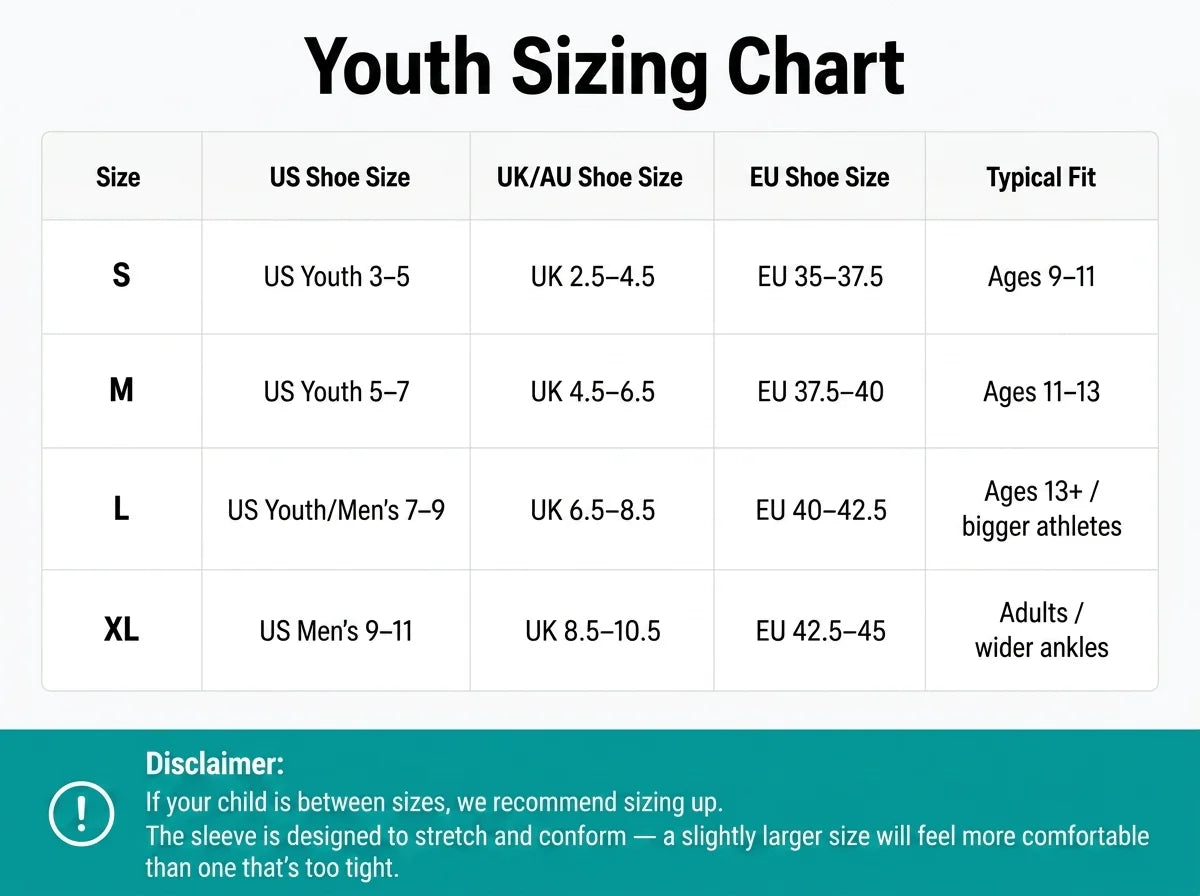
Size Guide Youth Sleeve


When Heel Pain Starts Taking Him Out Of The Game
Your son says his heel hurts after practice.
Then he starts limping after games.
Then he avoids jumping, sprinting, or cutting hard.
For young basketball players, heel pain comes from the Achilles tendon pulling on the growth plate from behind the heel. Rest removes the activity. It does not remove the pull. The moment he returns to the court, the traction starts again.
This sleeve is built to give young athletes targeted heel support during high-impact movement, without the bulky feel of generic ankle braces.
Built For the Basketball Moves That Trigger Heel Pain
Basketball heel pain shows up where he needs to move most: sprinting, jumping, cutting, and landing.
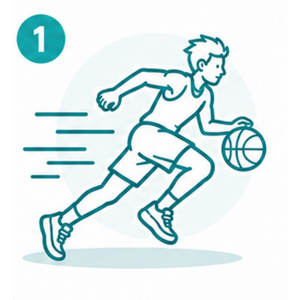
Fast Breaks
Every push-off pulls the Achilles tendon against the growth plate from behind.
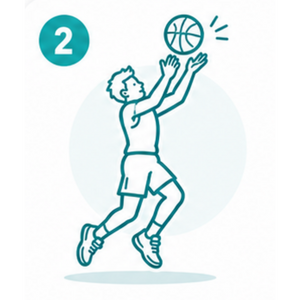
Jumping & Landing
Each takeoff and landing generates traction on the growth plate from behind.

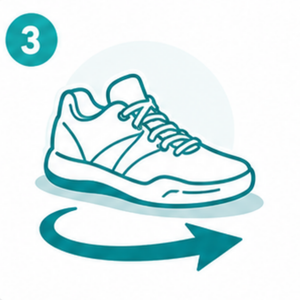
Cutting Hard
Direction changes create traction heel cups can't reach, they sit below the heel, not behind it.
Tournament Weekends
Multiple games in one day can make heel discomfort harder to manage.
Designed for Growing Young Athletes


The Heel-Lock Support System
Most ankle sleeves only squeeze the ankle.
This sleeve is built differently.
The cross-strap system wraps around the heel to help keep it supported during basketball movements like sprinting, cutting, jumping, and landing.
It gives targeted support where young athletes often feel heel discomfort — without the bulky feel of a traditional ankle brace.
Heel Stabilization
Stabilizes the back of the heel where the Achilles attaches to the growth plate.
Targeted Heel Support
Cross-strap compression positioned directly over the growth plate attachment point, where the traction originates."
Impact Comfort
Reduces Achilles traction force during the basketball movements that trigger the pain, not just after them.
Low-Bulk Fit
Fits inside high-tops without changing the shoe feel.
What Basketball Parents Are Saying
-
★★★★★
Back in the starting rotation in 3 weeks
"My son missed the entire fall showcase season. Six weeks of rest, twice.
His teammates were getting reps, coach impressions, everything — and he was icing his heel in the car. We tried the gel cups, new shoes, PT twice a week. Nothing held.
A dad from his AAU circuit told me about Balabu. Week three, his coach called me to say he was back in the starting rotation. He hasn't asked for the ice pack once since."

-
★★★★★
Wish I'd found this in August instead of February
"I spent probably $400 before I found this. Custom orthotics from the podiatrist. Two pairs of cushioned basketball shoes. Compression socks from Amazon. Every time we tried something new, the heel settled for a few days and then came right back.What finally made it click was understanding the pull is at the back of the heel, not the bottom.
That's what Balabu addresses. Within two weeks he was driving hard again without pulling up. Wish I'd found this in August instead of February."

-
★★★★★
He started talking about basketball again
"The heel pain was one thing. What got me was watching my son stop talking about basketball. He used to come home from every practice and tell me everything. Then he just went quiet. Three months of one-word answers.
We ordered Balabu mostly because we had tried everything else. Week two he came home and told me about a move he'd been working on — unprompted, just talking. Week four he walked to the car after practice without unlacing his shoe on the bench. I didn't say anything. I was waiting for it to come back. It didn't."


Less Limping After Practice. More Confidence On The Court.
The goal is not to turn your son into a different player. The goal is to get him back to the player he already was.
Your son stops unlacing his shoe on the bench after practice.
He stops pulling up on drives he would have taken six months ago.
He stops making calculations before every jump.
His coach stops managing his minutes.
He starts going for rebounds again without hesitating.
He starts talking about basketball at dinner again.
He gets back in the starting lineup.
Not because the pain magically disappeared. Because for the first time, something is addressing the right part of the problem from the right direction.
Not Another Generic Ankle Brace
Most ankle braces support the ankle. Heel cups only sit under the heel. This sleeve is built for targeted heel support during basketball movement.
| Balabu Youth Heel Sleeve |
Heel Cups |
Generic Ankle Brace |
Rest Only |
|
|---|---|---|---|---|
| Built for youth heel pain | ✓Yes | Partial | ✕No | ✕No |
| Targets heel area affected by Sever’s Disease | ✓Yes | Partial | ✕No | ✕No |
| Fits inside basketball shoes | ✓Yes | Sometimes | Often bulky | N/A |
| Supports sprinting, cutting & jumping | ✓Yes | Limited | Limited | ✕No |
| Can be worn during practice or games | ✓Yes | Sometimes | Sometimes | ✕No |
| Easy for kids to wear daily | ✓Yes | Yes | Sometimes | N/A |

Based On How Sever's Disease Actually Works
"Sever's Disease is not a bruise and it is not mysterious inflammation. It is a mechanical traction injury. The Achilles tendon, the strongest tendon in the body, attaches directly to a growth plate that has not finished forming yet. Every time a young athlete pushes off, jumps, or cuts hard, that tendon pulls on the back of the heel from behind.
Rest reduces the activity. It does not reduce the pull. The moment he steps back on the court, the traction starts again from rep one. That is why the rest-and-relapse cycle keeps repeating.
Gel cups and cushioned shoes treat impact from below the foot. Sever's pain originates from behind the heel. They are solving for the wrong direction.
Targeted compression wrapped around the back of the heel, worn during activity, not just after, is the correct mechanical response to this injury."
— Dr. Rachel Sanders, M.D., Pediatric Sports Medicine

Free Parent Guide
How To Manage Youth Heel Pain During Basketball Season
- What to do before practice
- When to reduce activity
- Shoe and support checklist
- Game-day warmup routine
- Questions to ask a sports doctor
Frequently Asked Questions
I’ve tried everything. Why would this be different?
I’ve tried everything. Why would this be different?
Most heel cups sit under the foot. They treat impact from below.
The pain in Sever's disease does not come from below. It comes from behind — the Achilles tendon pulling on the growth plate from the back of the heel with every push-off, jump, and cut.
Heel cups cannot reach that. Neither can orthotics. Neither can cushioned basketball shoes. They are all solving for the wrong direction.
Balabu wraps around the back of the heel with cross-strap compression directly over the attachment point. It is the only product in the gym bag that is treating the actual problem from the right direction.
Will this help with my child’s Sever’s Disease?
Will this help with my child’s Sever’s Disease?
Balabu is designed to support the heel area commonly affected by Sever’s Disease, also called calcaneal apophysitis.
For young basketball players, heel pain often comes from repeated impact during running, jumping, and hard landings.
This sleeve adds targeted heel compression and strap support to help your child feel more stable and comfortable during activity.
It is not a cure. If your child’s pain is severe, worsening, or persistent, consult a qualified clinician.
Can my child wear it during games and practice?
Can my child wear it during games and practice?
Yes. That is exactly what it is designed for.
The low-profile fit works inside most basketball shoes without adding bulky ankle bracing. It is made for practice, games, warmups, and tournament weekends.
Start with shorter wear periods first to make sure the fit feels comfortable.
Will it fit inside basketball shoes?
Will it fit inside basketball shoes?
Yes. Balabu is designed with a low-bulk profile so it can fit inside basketball shoes, including many high-tops.
Fit can vary depending on shoe tightness, sock thickness, and foot shape. If your child is between sizes, size up for comfort.
Should I buy one sleeve or two?
Should I buy one sleeve or two?
If only one heel hurts, one sleeve can be enough.
Most parents choose two because it gives their child:
- one for each foot if both heels hurt
- one backup while the other is being washed
- one for the gym bag and one for home
- better coverage during practices, games, and tournaments
For basketball season, two sleeves is usually the smarter option.
How long do they last?
How long do they last?
With proper care, Balabu sleeves are designed for regular athletic use.
How long they last depends on how often your child wears them, how intense practices are, and how they are washed.
For active basketball players, having two sleeves helps because you can rotate them between use and washing.
My doctor said to rest. Is this safe to use during sports?
My doctor said to rest. Is this safe to use during sports?
Rest is commonly recommended for youth heel pain, especially when pain is severe.
Balabu is a support sleeve, not a replacement for medical advice. It is designed to provide heel support during activity, but your child should not push through sharp, worsening, or severe pain.
If your doctor has told your child to stop playing, follow your doctor’s guidance.
Will my child actually wear it?
Will my child actually wear it?
Most kids are more likely to wear support when it does not feel bulky or awkward.
Balabu is soft, low-profile, and made to fit inside basketball shoes. The goal is to give support without changing how your child runs, cuts, jumps, or lands.
If the fit feels too tight, try sizing up.
Why isn’t this available on Amazon?
Why isn’t this available on Amazon?
We sell directly so we can control product quality, sizing guidance, customer support, and the buying experience.
It also helps us avoid knockoffs, poor-fit copies, and confusing listings.
What is your return policy?
What is your return policy?
Try Balabu for 30 days of real basketball. Practices, games, tournament weekends.
If he is not walking off the court differently, you get every dollar back. No forms. No conditions. No questions.
Most families see the first real change in week two or three. Watch for the practice he walks to the car without unlacing his shoe on the bench. Watch for the drive he takes all the way instead of pulling up. Watch for the night he stops asking for the ice pack.
If none of that happens within 30 days, we do not deserve your money.